 UN
[spacer height=”30px”]
In 2000, the UN set its “Millennium Development Goals” global project and included one of the most significant conditions of human life on Earth – a sustainable environment. A specific goal is to stop the exploitation of water resources and reduce the number of people living with no access to clean water.
[spacer height=”20px”]
Water covers 70% of our planet hence it is easy to think that it will always be abundant. However, drinking water is rare. Only 3% of the world’s waters are fresh, and 2/3 of them are in the form of glaciers.
[spacer height=”10px”]
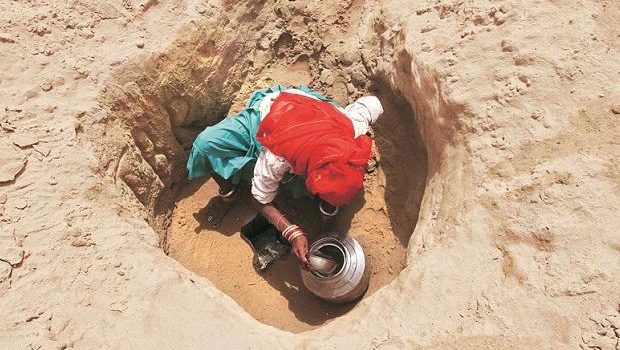
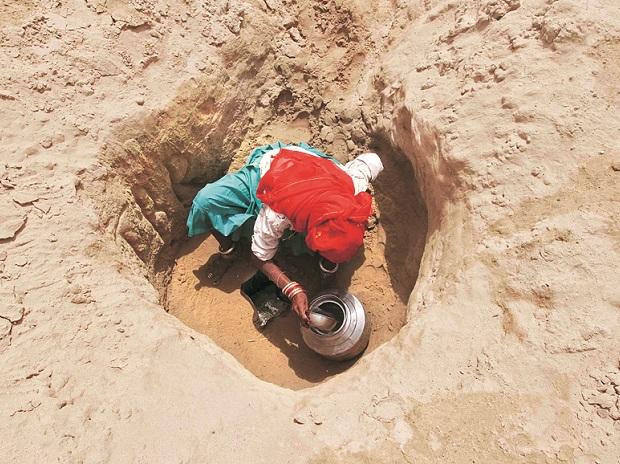
Nearly 2 billion people today live without access to safe drinking water and water supply to their homes. According to the UN, by 2050, 5 billion people will suffer from water scarcity due to climate change, increasing needs, growing population, polluted water springs and last but not least poor resources management.
[spacer height=”20px”]
The most alarming cases of water scarcity are the rivers Nile, Indus, Tiger and Euphrates, Brahmaputra and Colorado. River basins worldwide either dry up or become inaccessible due to pollution.
[spacer height=”20px”]
Lack of clean water causes the death of more children than AIDS, malaria and smallpox all combined. Nearly 1.5 million children die every year due to poor hygiene and lack of clean water.
The water challenges are largely affecting women, given the fact that in many developing countries they are traditionally responsible for domestic water supply. The average woman in Africa must walk about 6 km. day to collect and transport water to her family.
[spacer height=”20px”]
What is the lack of water due to? – There are two main reasons; physical and economic.
[spacer height=”10px”]
Physical shortage mostly concerns regions where resources cannot meet the needs of the population. Reasons may also be damages made by water overuse. This is evident in the example of the Colorado River in the United States. It used to be one of the principal waterways in the Southwest, providing water for 30 million people and generating hydroelectric power. Today unfortunately, efforts are being made to restore the flow of water, but it is unlikely that it will be fully revived.
[spacer height=”5px”]
The economic shortage concerns poor resource management, lack of infrastructure and technology. About 70% of freshwater in the world is used in agriculture. There is an urgent need to introduce new techniques and adapt to the changing climate.
[spacer height=”5px”]
It’s worrisome to think that countries like Mexico, where we often witness unfortunate heavy rainfall and even floods, actually suffer from water shortage. The absence of a efficient water recycling program leads to massive water waste and crises.
In 2017, we witnessed the ecological crisis in Cape Town, which forced thousands of people to line up and wait for their daily water dosage.
[spacer height=”20px”]
Unfortunately it’s becoming easier to imagine people fighting for access to drinking water in the near future. According to research, disputes over water will lead to instability, political conflicts and social unrest.
[spacer height=”20px”]
The Kashmir Valley has been at the heart of a political conflict between India and Pakistan for over 70 years. Several major water springs are located in the area, one of which is the Indus River – the center of the territorial dispute between the two countries.
[spacer height=”10px”]
Until recently – one of the greatest rivers in the world, today the river waters hardly reach the Arabian Sea. In 1972, under the supervision of the United Nations, a cease-fire was established between the two countries. The “Line of Control” bordr divided the area into two administrative territories. However political tensions between the two countries are escalating every day. The conflict directly affects water resources, with India threatening to break the international agreement and restrict water flow to Pakistan. Nearly 65% of Pakistan’s territory and ¾ of its population depend on the river More than 10 million Indians and 3 million Pakistanis live in the Kashmir region. Lack of fresh water will cause a never before seen mass migration of millions of people.
[spacer height=”50px”]
Clearly, we need to revolutionize industrial, agricultural, and urban water use.
[spacer height=”50px”]
Every year thousands are forced to leave their homes because of limited access to water resources. Lack of fresh water access issued approximately $ 260 billion in losses. Losses in agriculture have a crucial impact on the economic and social sectors. By 2050 around 200 million people could migrate as a result of extreme weather conditions and meteorological phenomenon.
[spacer height=”20px”]
The need to rethink the use of water resources is at the heart of solving the problem. Only introducing technological innovations and improving the infrastructure can prevent this environmental catastrophe. For example, all rivers in Vietnam could provide plenty of water, if used wisely. Applying common policies, regulations and new business models will help address the challenges of the water sector.
[spacer height=”20px”]
Reusing and recycling water
Innovative concepts for (alternative) water supply
Treatment of waste water
Methods for controlling sources of emerging pollutants
Governance, linking regions and raising public awareness
[spacer height=”20px”]
An interesting programs I came by, while making my research on the subject, is called “Danube-Mekong”. The International Forum gathers countries on each river to cooperate. The dialogue, involving politicians, experts and representatives of the UN and ASEAN, discusses the regional partnership and shares european expertise to countries in Asia.
[spacer height=”20px”]
The water shortage crisis has long left of the topic of ecology. Today, many people would agree that it’s in fact a matter of national security. The lack of water resources in the future will cause an unprecedented environmental, political and social crisis. The war on resources will be at the center of all international dynamics.
[spacer height=”20px”]
Hope is growing in Europe following the last European elections this year. With increased voter turnout, young people have reaffirmed their desire for a strong alliance. The trajectory they chose is also clear. Green parties gained great influence in countries like France, Germany and Finland.
[spacer height=”20px”]
Environmentally respectful policies should be in the center of every modern country’s vision for the future. Regional cooperation, economic support and strong regulation today are essential, especially when major world players refuse to tackle environmental crises. As for some of them, such as the United States let’s hope that 2020 will bring the wind change.
[spacer height=”50px”]
Viktoria Buchkova