 MENA
On December 10th, 2009, President Obama received the Nobel Peace Prize for which he was nominated only 11 days after he took office. The recognition was, in fact, controversial considering it difficult if not impossible to accomplish any miracles for less than two weeks. President Obama accepted the award for “his extraordinary efforts to strengthen international diplomacy and cooperation between people” and his vision of a world without nuclear weapons. The Nobel Peace Prize, however, is not an acknowledgment of aspirations but of accomplishments in the way that great politics don’t call for just good intentions – but requires effective actions. Hence, President Obama had to fulfill a program of miracles to defend his award.
[spacer height=”20px”]
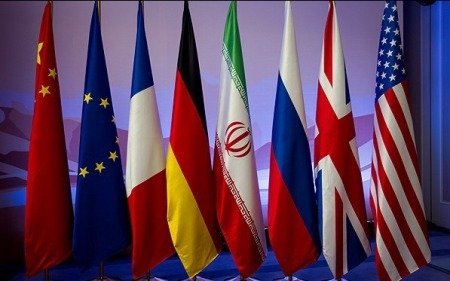
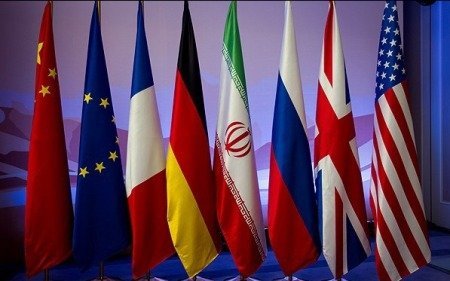
Over the summer of 2015, after years of negotiations, the P5+1 and Iran reached The Joint Comprehensive Plan of Action, known as the Iran nuclear deal. Signed by the 5 permanent members of the UN (The United States, China, Russia, France, and the United Kingdom) plus Germany, the deal sought to prevent Iran from developing its nuclear program. In exchange, Teheran would receive relief of various economic sanction imposed following the Iranian Revolution (1978-1979). This agreement was the pillars of Obama’s foreign policy mainly because it was the first diplomatic progress in the US – Iran relations in more than 30 years. It was also the President’s way to reinvigorate the US’s soft power foreign policy.
[spacer height=”20px”]
The control agreement gave great access and transparency to monitor Iran’s uranium’s enrichment. Since the JCPOA came into action, President Rouhani’s government has complied with the international requirements and has kept its nuclear commitments. This unprecedented success of a mutual dialogue was applauded everyone except for Saudi Arabia, UAE, and Egypt – Iran’s main regional opponents.
Coming into office, President Trump also had a reputation to uphold – reverse everything his predecessor Obama left as a legacy. Pulling out of the Paris Climate Agreement, the Trans-Pacific Partnership and the International Arms Treaty were some of the steps to overturn Obama years. During his presidential campaign, Trump described the nuclear agreement as “one of the most incompetently drawn deals I’ve ever seen”. This highlights even more Trump’s rejection of the JCPOA as political and strategic but also personal move. The US withdrawal from the deal on May 8th and the reintroduction of economic sanctions created a wave of criticism and disapproval from partners around the world and stirred tension between President Trumps and his partners.
Surely, the JCPOA is far from perfect. Even if the deal holds up here is how it will play out:
[spacer height=”30px”]
-
In 2020 the U.N. ban on Iranian arms export and import will lift and the country could build its military. This will cause instability in the region, with strong opposition from the Gulf and predicted form of control over Iran’s regional policy.
Iran’s increased influence in the region will strengthen regime allies like Hezbollah directly putting in danger Teheran‘s long rivals Saudi Arabia and Israel.
-
In 2023, Iran will have a much easier path to acquire missile components and technology.
-
In 2025, U.N. sanction will fall too. Snap-back sanctions, in case Iran violates the deal, are not automatic and re-imposing them would be practically impossible. They would require another UN resolution, which Russia and China could veto.
-
Eventually, in 2031, all nuclear restrictions will life. By this time Iran could reduce its nuclear weapon breakout and perfect its manufacturing.
[spacer height=”20px”]
Even if it the deal survives it will only take effect for a short time before it expires in 2030. And eventually? Iran will still have the technical capacity to maintain a nuclear program.
[spacer height=”40px”]
It is premature to think that during those 15 years of international control can the West create sufficient diplomatic relations with Iran and ensure that Teheran won’t return to its nuclear program – now without any economic restrictions in its way?
[spacer height=”40px”]
On the other side of the Pacific, in an attempt to salvage the nuclear deal, EU leaders desperately try to provide economic compensations to offset secondary US sanctions for companies trying to companies engaged in Iran. Unfortunately, it’s proving clearer that re-introducing a 1990’s blocking statute will not be enough to satisfy European businesses or the Iranian government.
[spacer height=”20px”]
In the meantime, Moscow is trying to take advantage of the US-Iran crisis to boost its image as a mediator and an international partner in the region.
President Rouhaini has also made several attempts to gain allies in the face of China, Japan and India. Unfortunately even such geopolitical powers don’t seem reliable enough in the fight against the US.
[spacer height=”20px”]
Until recently the United States has tried to keep its maximum pressure strategy on Iran. This kind of policy is a “tried and true” and is designed to disrupt the Iranian economy by imposing the toughest sanctions and to bring Rouhaini’s government back to the negotiating table for a new nuclear accord. In further attempts to intimidate Iran, Trump administration has also announced it will be sending additional 1500 troops to the Middle East with “mostly protective role”.
[spacer height=”10px”]
This maximum pressure campaign has proven effective as far as economic harm goes. Iran’s currency has lost almost 2/3 of its value against major currencies and oil revenues have dropped by more than $10 billion (since November 2018). However economic hardships have not yet triggered any popular unrest in the country. In a possible scenario, a crippling economy would lead Iranian people to rise up and threaten the regime’s survival.
[spacer height=”20px”]
What this policy does is isolating the United States from its allies. A new change in strategy and rhetoric is needed to keep America’s credibility. On June 3rd Secretary of State, Mike Pompeo stated that the US is “prepared to engage in a conversation without any preconditions”. Several days later, President Trump made clear he is not seeking regime change in Iran and is open to a dialogue.
[spacer height=”20px”]
Despite the US changing its position, Rouhani’s government is staying skeptical toward any diplomatic proximity. It’s not surprising as public opinion in the country highly doubts the US’s intentions. Iranians are staying cautious vis a vis any negotiations with the Trump administration for mainly two reasons. Washington’s close partnership with Saudi Arabia and Israel is seen as an increasing threat to the regime and the region’s stability and balance of powers. On the other hand, Iran is surrounded by examples of the criticized U.S. policy in the Middle East and North Africa. The cases of Libya, Iraq, Yemen, Syri, and Egypt are still reminders of controversial international interventions and are still used to draw lessons from.
[spacer height=”30px”]
While the Joint Comprehensive Plan of Action is far from perfect, it was aimed to constraint Teheran’s nuclear program for a period of time and provide monitoring. Which it did! The JCPOA is the closest we have gotten to an international agreement and a transparent and effective dialogue with Iran since 1979. There is an urgent need to address the deal’s shortcomings and what is known as “the sunset clause”. Using the diplomatic progress it has achieved, the international coalition should work to redesign the agreement and to develop a more constructive dialogue consistent with international nonproliferation norms and restrictions. The US strategy of maximum pressure with no concrete “plan B” will only create more tension and the fear of another costly US war. The European Union should defend its favorable position to the deal and should strive to create long-term plans and broader regional strategies. In the same time, adjusting sanctions to punish an eventual violation will ensure strict compliance with the deal’s terms.
Viktoria Buchkova